
HUMAN FACTORS FOR MEDICAL DEVICES_
A subset of pediatric patients who require non-invasive ventilation (NIV) cannot find a mask with a satisfactory fit. This project seeks to address this gap through the development of customized NIV mask solutions, from reliable and repeatable data collection procedures to mask design. Through contextual inquiry, user interviews, and usability testing with clinicians, caregivers, clinical research staff, and medical sales representatives, the team identified key barriers to accurate data capture and device fit. Applying human factors engineering to customized mask design, Julianne contributed to the development of data collection protocols, prototyping of facial interface components, and workflow validation in a Pediatric Intensive Care Unit (PICU) to improve outcomes for pediatric patients.
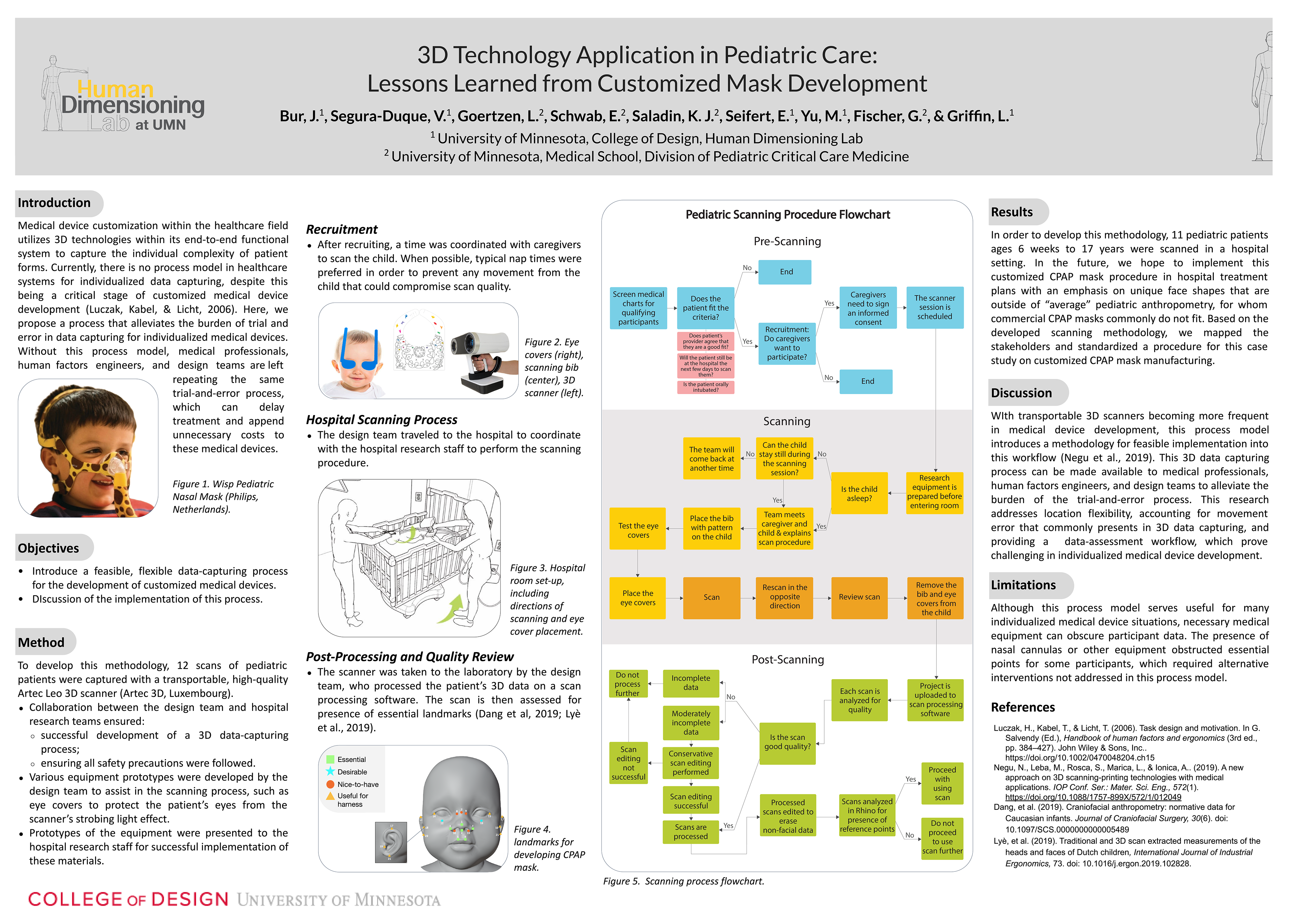
Poster presented at the 2024 HFES International Symposium: on Human Factors and Ergonomics in Health Care.
Proceedings paper presented at the 2024 Design of Medical Devices Conference.
Design Objectives:
// Seamless workflow integration in dynamic PICU environment / Repeatable and reliable data collection methods / NIV mask safety
Development Process
//////////////////////////
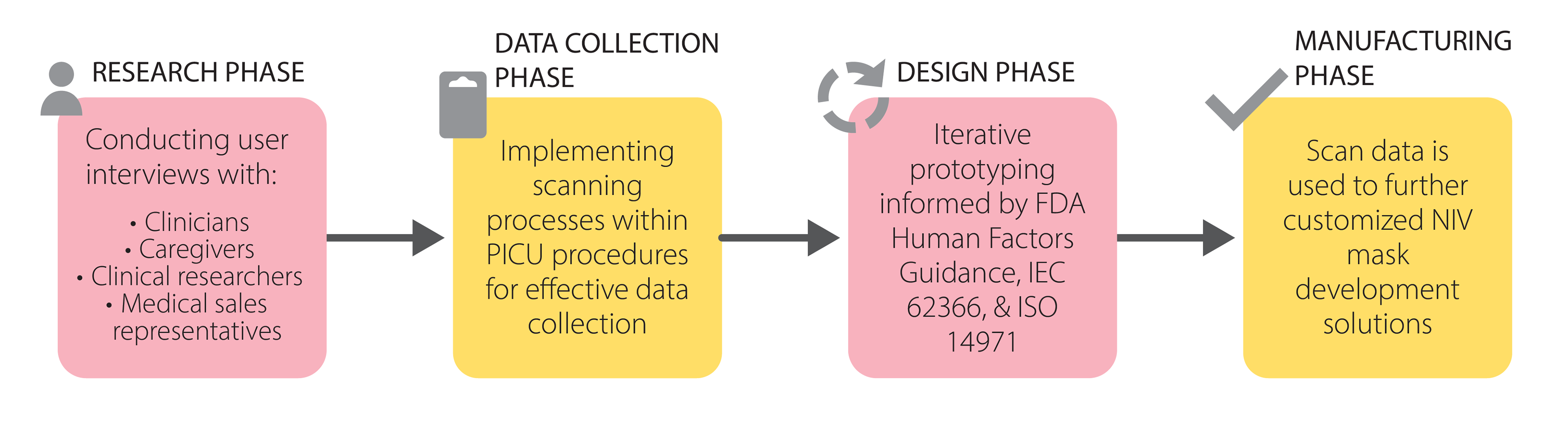
RESEARCH PHASE
Contextual Inquiry
IRB-approved user interviews were performed with clinicians, caregivers, clinical research staff, and medical sales representatives uncovered needs, hazards, environments, and artifacts. Observational research identified use errors, hazardous situations, physical environments, and care coordination.
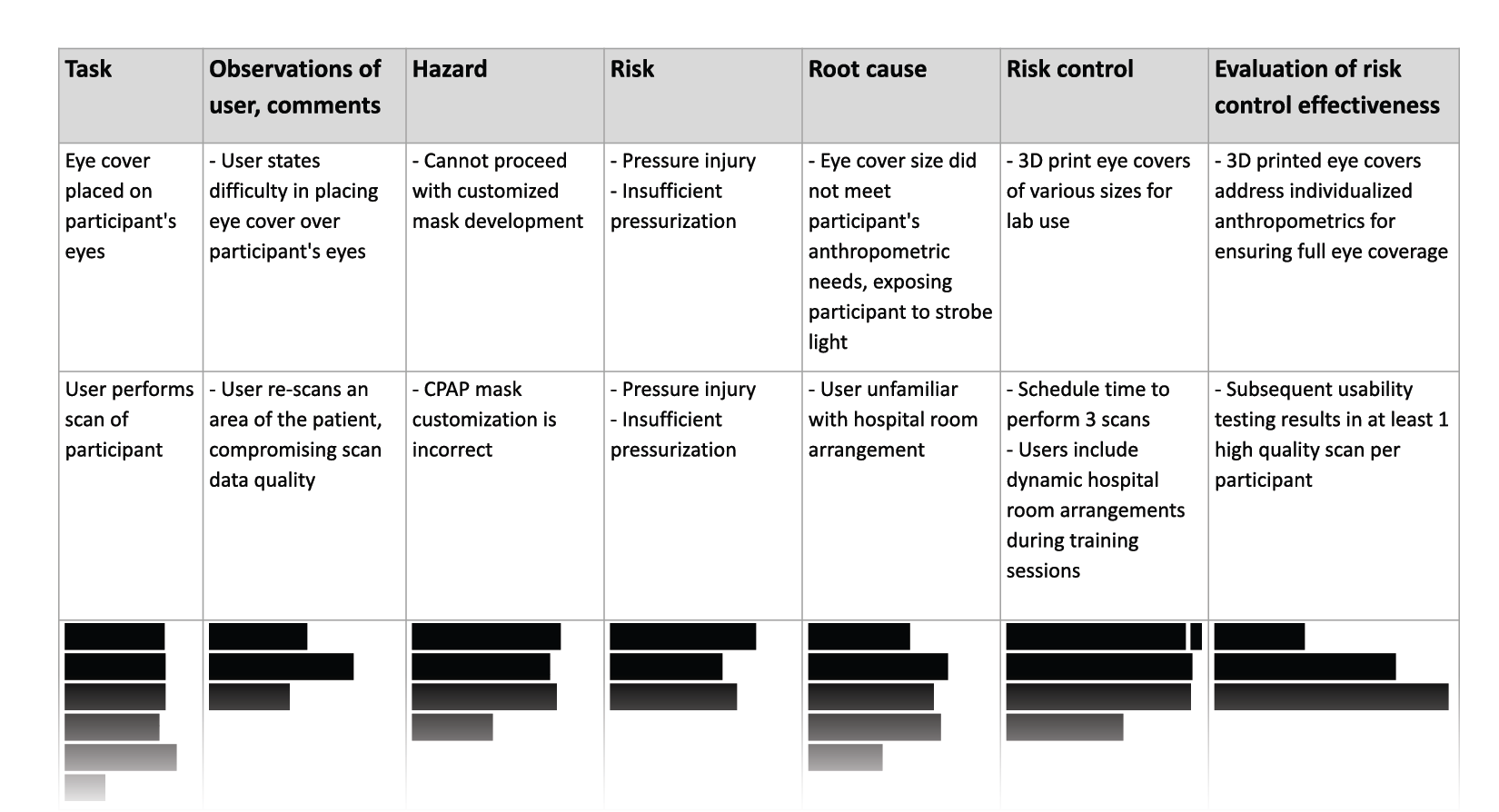
Use-Related Risk Assessment
A task analysis was performed, utilizing root-cause analysis strategies such as Fault Tree Analysis and Perception Cognition Action Analysis. This analysis was an iterative effort throughout the scope of the project, with each formative usability test providing additional insight.
//////////////////////////
DATA COLLECTION PHASE
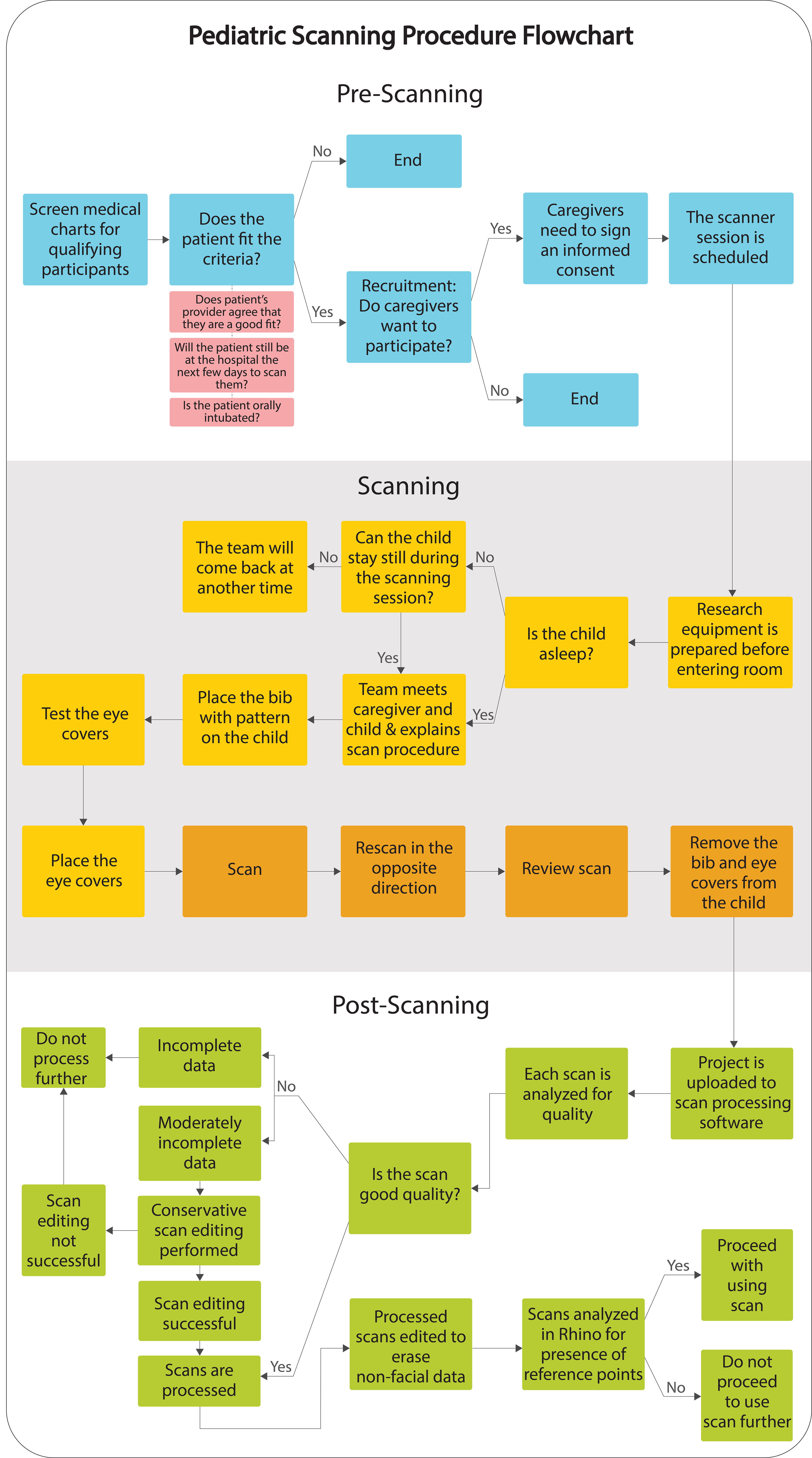
Usability Testing
Usability testing was performed in a simulated hospital environment. After refining the procedure, final usability tests were performed in the PICU with participants.
//////////////////////////
DESIGN PHASE
Customized Mask Development
The finalized procedure aided in the development of customized NIV mask solutions for patients. By ensuring reliable data collection procedures, critical anthropometric data could be captured, allowing for accurate customization.
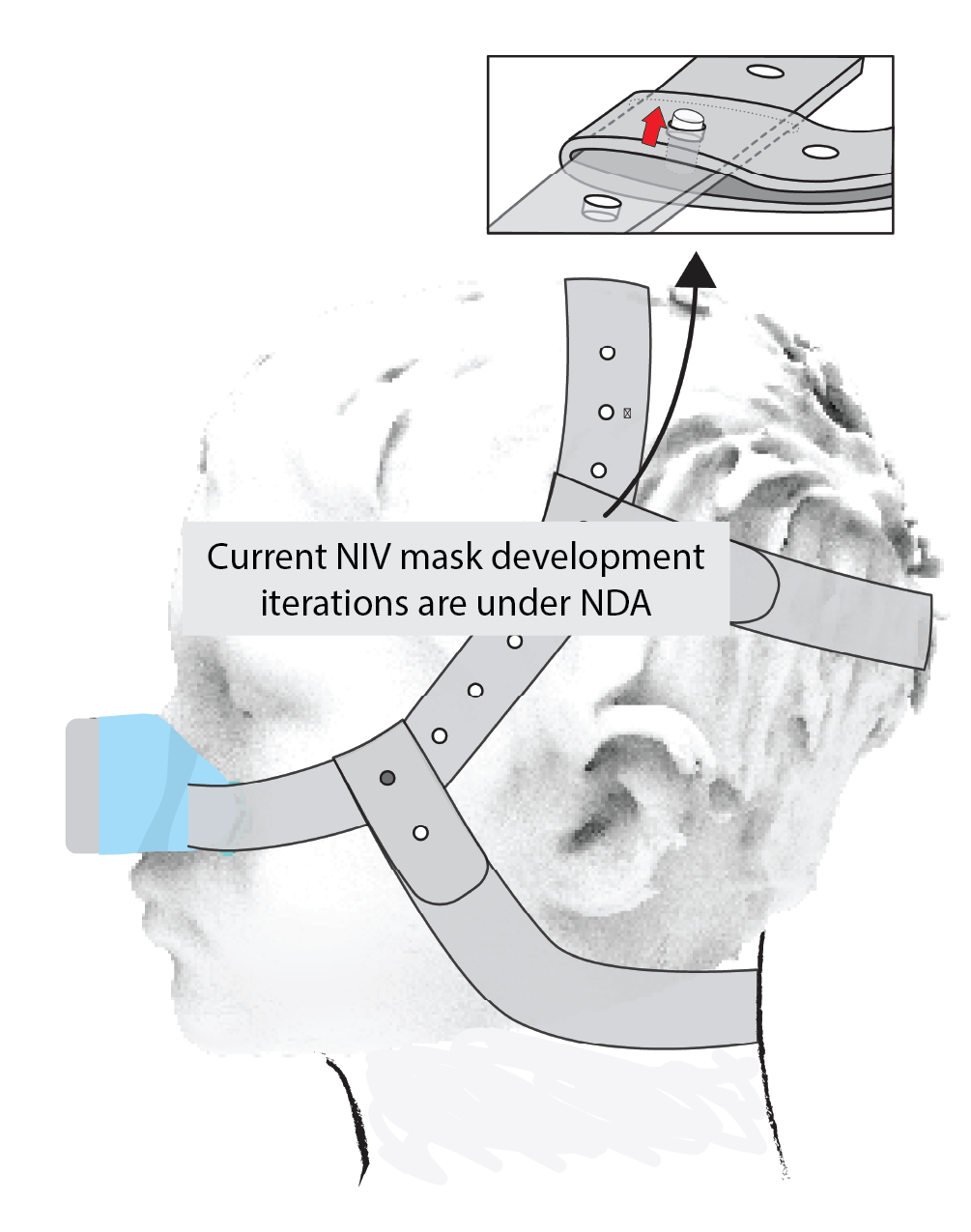
Current NIV mask development iterations are under NDA, but include creation of physical CPAP models based on customized facial anthropometry data.
//////////////////////////
MANUFACTURING PHASE
This is an ongoing project at the University of Minnesota. The manufacturing phase of development currently involves a continued iterative design process, with the objective of creating customized NIV masks for PICU patients.
For more information about my end-to-end product lifecycle experience, see my LinkedIn at https://www.linkedin.com/in/julianne-bur
//////////////////////////
Bur, J., Duque, V. S., Goertzen, L. A., Schwab, E., Saladin, K., Seifert, E., Yu, M., Fischer, G., & Griffin, L. (2024, March). 3D Technology Application in Pediatric Care: Lessons Learned from Customized Mask Development [Poster presentation]. HFES International Symposium on Human Factors and Ergonomics in Health Care, Chicago, IL, United States.
Duque, VS, Bur, J, Seifert, E, Goertzen, L, Schwab, E, Saladin, K, Fischer, G, & Griffin, L. "Pediatric 3D Head Scan Evaluation for Customized Respiratory Support Mask Development." Proceedings of the 2024 Design of Medical Devices Conference (DMD 2024). Minneapolis, MN, USA. April 8–10, 2024. https://doi.org/10.1115/DMD2024-1090